 EN
EN
Manufacturing Efficiency: How ERW Pipe Production Lowers CAPEX and OPEX
Welders for ERW pipes and high-frequency welding utilize less energy and labor and make less waste to produce.
The cost-related benefits of pipe manufacturing via ERW processes are attributed to high frequency welding and cold-forming techniques. Eliminating mandrel piercing and billet reheating hot processes reduces energy consumption by almost 40%. With automation, we can reduce factory labor requirements by as much as 60%. Coils are also utilized to minimize waste to as little as 3%. Seamless pipe producers normally have scrap rates of 12% to 15%. There are no high-temperature processes resulting in additional savings due to less expensive heating, fewer emissions, less thermal maintenance, and lower overall heating operational costs.
Production of seamless pipes has more expensive operational and capital costs because of the necessary processes and expensive equipment like rotary piercing and mandrel rolling, which pose additional costs due to the need of constant reheating of materials at temperatures of 1,200 to 1,300 degrees Celsius.
Materials used for manufacturing seamless pipes need to undergo multiple heating and cooling cycles. This operational process drives costs significantly higher, as equipment for seamless pipe manufacturing costs two to three times more than equipment for producing electric resistance weld (ERW) pipes. Additional costs for seamless pipe manufacturing include maintenance costs, which increase 35 to 50 percent because of the fast wear and tear of equipment and constant refurbishment of materials. Overall, costs for manufacturing seamless pipes increase due to longer production cycles, highly specialized machine operators, and poor machine reliability.
Speed differential: >30 m/min for ERW lines compared to <5 m/min for seamless mills.
The modern ERW mill is operating faster than 30 meters per minute. This is approximately 6 times faster than traditional seamless mills that have a maximum speed of 5 meters per minute. ERW mills operate at a faster pace, meaning they make steel faster, and they require about 40% less production lines than seamless mills. ERW mills also have a better time advantage for switching to different products. It typically takes less than 30 minutes to retool seamless mills, while retooling takes a seamless mill 4 hours or more. These time savings translate to much better production for a given period. Less time downtime improves the schedule for the mills, and gives the millers the production they need to meet production goals.
Direct Cost Comparison: Pricing of ERW Pipe vs. Seamless Pipe by Material Grade
Carbon Steel ERW Pipe (ASTM A53, Q345) is 25 - 35% lower per ton than seamless alternatives
When evaluating cost savings for a carbon steel project, ERW (Electric Resistance Welded) pipes should be at the top of the list. Most ASTM A53 and Q345 grade ERW pipes cost 25 - 35% per ton than seamless pipes. What is the reason? It is primarily due to the efficiency of the manufacturing process. Steel strips are cut and formed into cylindrical shapes using cold forming. The next step is high-frequency welding, which eliminates a bulk of the process steps involving heating, piercing, and extruding associated with other processes. For fabricators with limited project budgets, the savings gained with ERW are significant and the end result is still reliable. For structural support and low-pressure fluid transport systems, ERW pipes are ideal and suitable for use under ASME B31.4/B31.8 Class 600 standards.
For stainless steel 316L applications, ERW pipes are much more cost effective than seamless pipes (over 42% savings). This is due to the process utilized when manufacturing the pipes. Instead of using solid billets in their manufacturing, rolled flat strips are utilized, meaning less of the invaluable alloying materials of nickel and chromium are wasted. Additionally, high frequency resistance welding produces minimal surface oxide scale so etching, a pickling process, is essentially eliminated, and with it, the costs associated with hazardous and expensive acids. This is especially true in the chemical and saltwater industries, where pipes are needed to be cost effective, as well as the applications with monetarily critical performance requirements. ERW pipes deliver on performance and cost savings, making them a go to option for engineers and plant managers.
Material Type Cost Advantage of ERW Pipe Primary Efficiency Drivers
Carbon Steel 25–35% lower/ton Reduced material waste (12–18%)
Stainless Steel ~42% premium avoided Lower alloy loss, simplified pickling
Total Installed Cost: How ERW Pipe Reduces Fabrication and Field Installation Expenses
Reducing labor and equipment rental expenses
ERW pipes even walls and consistent metal properties translate to speed in getting pipe ends ready for connections. Beveling and threaded ends, and groove cuts are all easier and quicker than what we experience with seamless alternatives. When joints fit together consistently, assembly requires less hands-on adjusting. Crews also spend less time renting welding equipment, torque wrenches, and alignment tools. For large, multi-site construction projects, all these little things add up. Scheduling is tightened while maintaining required welding quality and compliance with all standards.
Dimensional tolerances eliminate gaps in assemblies and the need for rework in piping and structural systems.
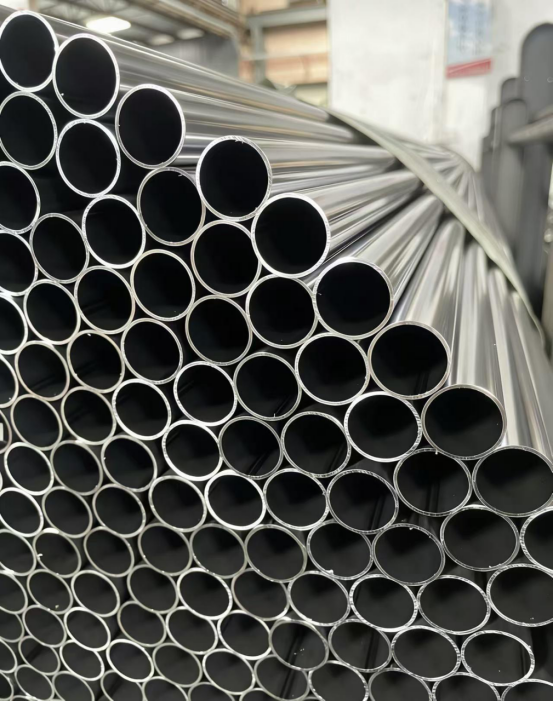
Today's ERW pipes are exemplary in achieving precise and uniform dimensional control due to advanced roll-forming technologies and quality control in the high-frequency (HF) welding process. Fabricators are finding the pipes fit perfectly in the workshop and on the field during spooling operations. The pipes are minimizing alignment issues and gasket adjustments, and decreasing post-installation time. In structural and pipeline applications, studies indicate the need for rework is up to 30 percent compared to seamless pipeline alternatives. The rework avoidance translates to a significant reduction in labor, material wastage, and time losses, thereby improving project timelines along.
Strategic Selection: When ERW Pipe Provides Optimum Cost Benefits With No Performance Trade-Offs
Pressure and service conditions: ASME B31.4/B31.8 Class 600 certification for non-critical hydrocarbon transport and associated infrastructure
ERW pipes are certified by ASME B31.4 and B31.8 for the transportation of hydrocarbons at lower and medium pressures and for water distribution as well as utility line construction and structural support construction. These applications generally involve operating temperatures below 450°F and pressures below 300 psi. Otherwise, having that certification means the pipe can be relied upon for non-critical services. ERW pipe is, on the whole, chosen by imported Engineers, in comparison to seamless pipe, which can be 25% to 40% more expensive, while still ensuring that all of the governing safety and operating regulations are satisfied. There are, of course, genuine efficiency gains throughout the manufacturing process. There is less alloy material wasted, no energy is lost due to reheating, and there is not as frequent a need to replace refractories as there are with other production methods.
Material and specification alignment: ASTM A500, A53, A135, and EN 10219 make ERW pipe ideal for structural, utility, and low-to-medium pressure applications.
The combination of all these standards like the ASTM A500, which applies to cold formed structural tubing, the A53 standard pipe which is meant for general service applications, the A135 electric resistance welded conduit, and EN 10219 which is for cold formed welded structural hollow sections, clearly indicates why ERW is so applicable to structural work, utility projects, and low-risk industrial piping. When manufacturers make consistent dimensions with ERW pipe, this really helps reduce fit up problems and improves fabrication efficiency, which translates to faster assembly and enhanced overall yield. For projects that remain within the standard limits and the ASME Class 600 parameters, ERW pipe offers the same mechanical functionality as seamless options, but at a cost reduction of approximately 25 to 35 percent with materials, providing the opportunity to add significant value to the installed system while ensuring all safety, quality, and regulatory standards are met.
FAQ
What are the main advantages to using ERW pipes instead of seamless pipes?
The advantages of ERW pipes are that they provide fast output, require less installation time, and reliably perform at a level that meets safety and quality standards. They achieve all this at a reduced cost and provide significant savings on materials.
What factors contribute to lower manufacturing costs with ERW pipes?
With ERW pipes, the costs are lower due to the cold-forming and high-frequency welding methods that require no reheating and piercing, resulting in energy and labor cost savings.
What is the cost benefit of carbon steel and stainless steel ERW pipes versus seamless pipes?
Carbon steel ERW pipes are usually 25-35% cheaper per ton than seamless alternatives, and savings for stainless steel ERW pipes is approximately 42% due to lesser alloy loss and processing being more straightforward.