 EN
EN
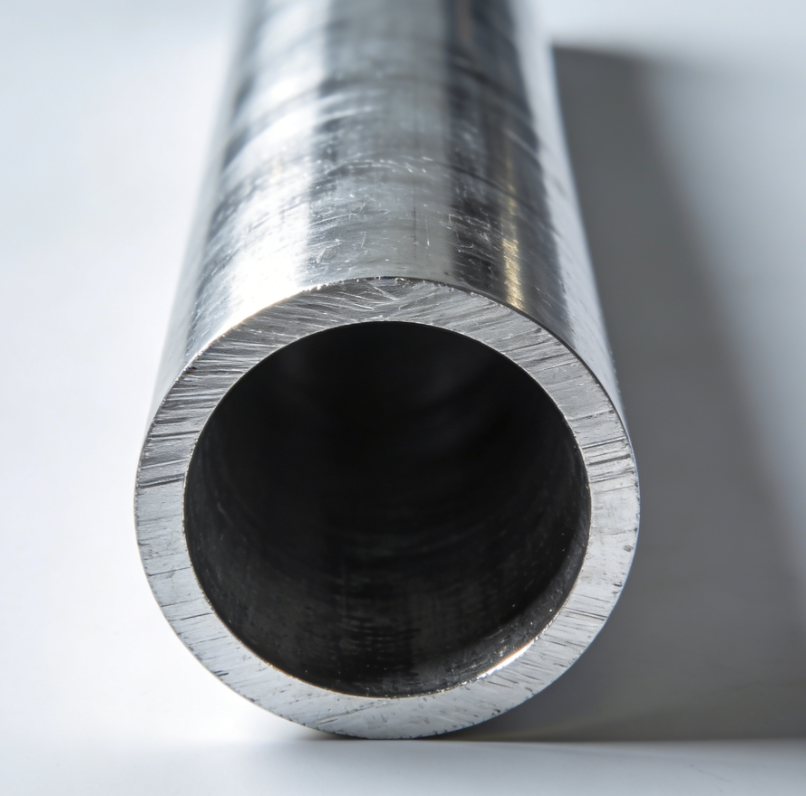
Ultimate Control Over Raw Material: The Primary Step in Consistency of Quality in ERW Pipe
Selection of Steel Coils Approved by ASTM-A53/A135 and IQC Certification
The creation of any ERW pipe of the highest quality starts with steel coils that are certified as per ASTM A53/A135 standards. Before any processing is initiated, the coils are subjected to rigorous Internal Quality Control (IQC) that tests and assesses chemical composition, tensile strength, and surface quality—yield strength is determined to be ≥30 ksi and the carbon content to be ≤0.30%. These parameters are validated by the Third-party mill test certificates and addressed to avoid inconsistencies that could cause welding failures and/or dimensional deviations in the finished pipe.
Leveling, Slitting, and Edge Conditioning for the Production of Premium Quality Forming Feedstock
The processing of coils is composed of three aspects that are strictly controlled to produce quality forms to be used as feedstock. Precision leveling literally removes the stresses internally and curvature deviations do not exceed ±1.5°. The slitting machines produce widths that are exact to ±0.1 mm tolerance and utilize carbide tipped blades. Edge conditioning is completed with a secondary slitting blade to produce a profile that is smooth and burr-free with a bevel angle of 30-35° ±5°. The integrated and pre-conditioned forming feedstock is the guarantee for uniform metal flow during the roll forming process as well as weld integrity and the dimensional stability of the finished ERW pipe.
High-Frequency Resistance Welding: Core Process for Reliable ERW Pipe Integrity
U-O/C-U-O Forming Precision and Tight Edge Bevel Tolerance (±0.2 mm)
The forming process of welding integrity is the basics of what the machines were designed for. The modern day Erw mills have been designed in two formats, its either U-O (Single Step) or C-U-O (Multi-Stage) forming and the selection of one over the other is determined by the wall thickness and diameter of the pipe in question.
Forming Method Dimensional Accuracy Key Applications
U-O Forming ±0.5% diameter tolerance Standard pipe sizes
C-U-O Forming ±0.3% diameter tolerance Heavy-wall pipelines
The two methods are used to maintain edge bevel tolerances that are within ±0.2 mm as per the thermomechanical studies that have been carried out. This is meant for the control of stress concentrations and the elimination of gaps ahead of welding.
Eliminate oxide inclusions and guarantee complete penetration in HF welds.
High frequency (100–400 kHz) electromagnetic fields rapidly (milliseconds) heat strip edges to about 1400C. Optimizing power calibration, squeeze pressure, and Vee angle control allows for fusion temperature, oxide calving, and heat uniformity. Proper tuning allows the achievement of full-penetration welds, achieving ductility levels of the base metal, and to reduce inclusion levels by 92% when compared to the conventional process. These joints have been validated to withstand 1.5x SMYS hydrostatic pressures and have been verified by ASTM E273 compliant ultrasonic testing.
Post Weld Conditioning: Sizing, Straightening, and Dimensional Stabilization of ERW Pipe.
Post-weld conditioning of the ERW pipe to achieve desired shape, size, and stability is precise. First, sizing rollers achieve a calibration of 0.5% diameter tolerances. Next, controlled-automation straightening relieves stresses and achieves a curvature meeting the straightness criteria of ASTM to within 0.2% of length. Inline laser gauges continuously monitor the shape and, along with millimeter-correct automated cutting, provide a length. Forced-air cooling locks in the metallurgical qualities, accomplished during transforming welded tubes to dimensionally stable products, is qualifying them for high pressure service.
Thorough Final Inspection: Ensuring Quality of ERW Pipe Prior to Shipment.
Hydrostatic Testing of ASTM A135 with real-time leak detection
Every single ERW pipe is subjected to hydrostatic testing at 1.5x SMYS with the added criteria of real-time leak detection. This testing simulates decades of operational stress to the material and reveals hidden flaws in the materials and weaknesses in the welds in a matter of minutes. Advanced sensor technology allows the detection of micro-leaks greater than 0.1 GPM, thereby instantaneously allowing the rejection of faulty units. Manufacturers implementing this revised protocol have seen a 63% reduction in field failures compared to inspection based solely on visual observation in the field, thus increasing the reliability of pressure containment in critical infrastructure such as water mains and gas distribution systems.
Ultrasonic Weld Inspection (ASTM E273) and Automated Surface Defect Mapping
After conducting hydrostatic testing, we perform phased array ultrasonic testing (UT) at each weld seam per ASTM E273. Subsurface anomalies (lack-of-fusion zones, oxide inclusions) can be detected with 0.5 mm resolution. At the same time, an AI-powered Optical System maps surface defects (scratches, pitting, etc) through the entire pipe length. Such dual verification creates a digital quality fingerprint for traceability, with defect coordinates documented for 3rd party inspections. Production batches are guaranteed less than 0.2% reject rates, ensuring we only ship ERW pipes that are fully compliant to project sites.
FAQ Section
What is ERW pipe?
ERW pipe, or Electric Resistance Welding pipe, is a type of pipe used for fluid and gas transmission. It is constructed by welding edges of a steel coil using an electric current.
What are ASTM A53/A135 specifications?
ASTM A53/A135 specifications outline the steel pipes' physical and chemical characteristics. These standards assure that the pipes have the correct composition, strength, and structural integrity for various applications.
Why is raw material control important in ERW pipe production?
Raw material control plays an important role in ensuring steel used in pipe manufacturing process meets the requisite standards and specifications, eliminating weld failures in the future and ensuring the pipe quality remains consistent.
How does High-Frequency Welding enhance pipe integrity?
Pipe integrity is enhanced by High-Frequency Welding through creation of reliable, strong welds that are devoid of inclusions and fully penetrated, ensuring the pipe does not fail under the prevailing pressure and stress.
What are the advantages of Post-weld Conditioning?
Post-weld conditioning of ERW pipes helps improve their dimensional accuracy and retention stability by correcting residual stresses and calibrating dimensions and allows the pipes to be utilized in high-pressure applications.