 EN
EN
Adjustable desk heights and their compatibility with anthropometric data
Minimum-maximum movement range of desk height according to BIFMA and ISO standards
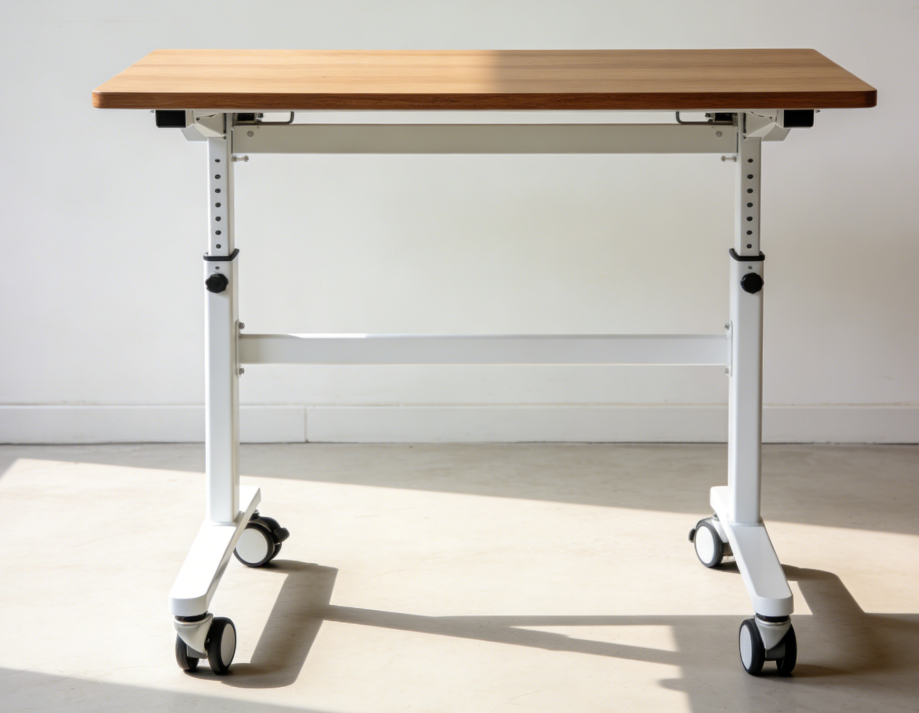
Industry standards provide considerable height restrictions when evaluating ergonomic workstations. According to BIFMA standards, desk height should range from the minimum height of 56 cm to a maximum height of 76 cm in consideration of a seated 5th percentile female and a 95th percentile seated male. The ISO standard dictates an additional requirement for vertical travel of at least 20 cm in order to accommodate dynamic posture shift. Together, these standards span across both ISO and BIFMA to ensure that 90% of a workforce achieves a neutral posture - reducing the incidence of the most common types of repetitive strain injuries. Non-adjustable height desks, by nature, will inherently violate this baseline ergonomic standard.
OSHA also dictates relatively similar standards for neutral posture desks by indicating that the work surface in both a seated and a standing position should coincide with the height of the elbows. The intent behind these standards is to prevent the shoulders from being elevated and to accommodate the line of sight to the monitor. The latter has resulted in a significant decrease in the incidence of discomfort caused by workstations with fixed height desks. Fixed height work desks pose substantial risk of musculoskeletal injury.
The Most Extreme Gaps Determined by Adjustable Desk Height
160–190 cm For Comfortable Functionality
As it has been shown, sitting and standing heights of desks around 65–125 cm are most comfortable. While standing desk use or seated desk use are the two ends of the continuum, the majority of people and most adults between 160 cm and 190 cm enjoy the desk use of both seated and standing heights of 65–125 cm. More importantly, the center of the elbow for seated desk use will naturally be around 90°. Seated wrist flexion will also be at a neutral angle to the horizontal plane of the keyboard. The center of wrist flexion will also be at a neutral angle to the horizontal plane of the keyboard. This horizontal plane of the keyboard will also be resting at a height that is easily accessible to the vertical plane. An international study conducted in 2024 (i.e., Anthropometric Workplace Study 2024) reported that 72% of office related injuries of the location of the desk height and injury was accounted for by office morphologic injuries. This suggests that a 60 cm height adjustment is a necessity.
Individual Gaps for Extra Tall and Extra Short Desk Users
Outside of standing desk and seated desk use, there is also a need to be seated at a desk of height 55–60 cm. For seated desk use, the center of the feet should be at a natural angle to the vertical plane resting at a height of 65 cm (the typical seated desk use height). Short desk use gaps cause chronic injuries. The most OSHA (Occupational Health and Safety Administration) related injuries of note for varying heights are chronic desk use injuries. Although there are desk heights with a continuum of 55–135 cm that help alleviate the gaps associated with desk use injuries, the use or deficiencies a keyboard tray that is adjustable to a 0 degree slope, and the use of a footrest.
Seamless Sitting-to-Standing Transitions: The Critical Role of Adjustable Desk Travel Distance
Minimum 25"–30" Vertical Travel for Dual-Mode Flexibility
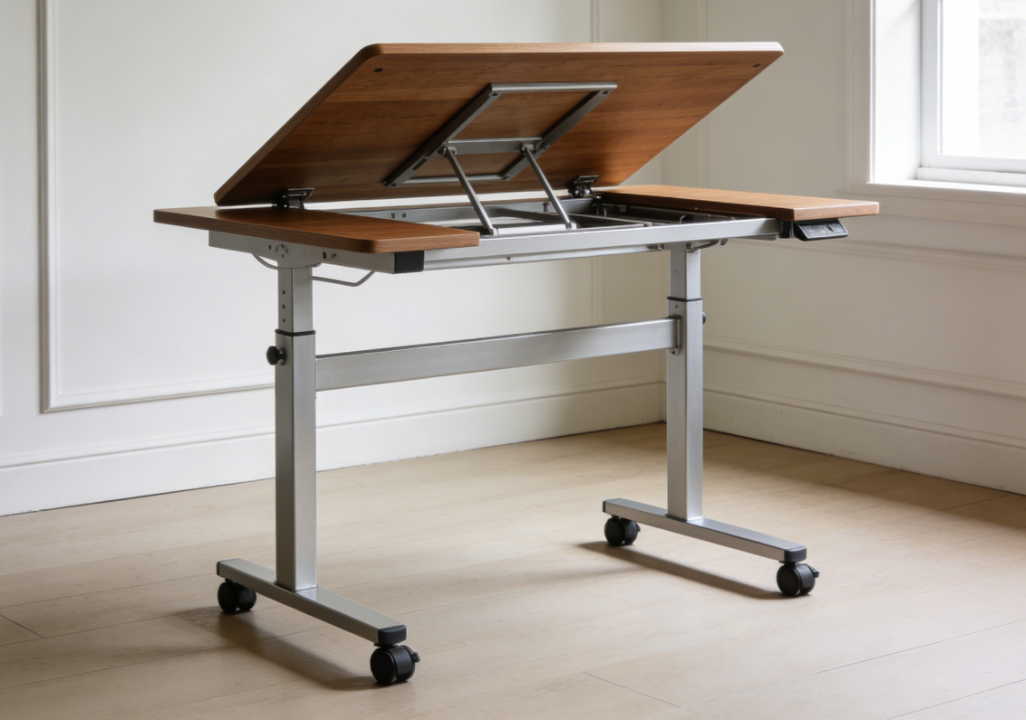
To provide users with smooth transformations from sitting to standing at desks, there must be enough vertical travel, ideally between 25–30 inches (63–76 cm). More than 25 inches causes 68% of users adopting a suboptimal posture, leading to higher spinal loading and a decline in in effectiveness. Additionally, this range encourages a variety of statures (155–200 cm) to avoid crouching or overreaching and supports workflow-specific positioning whereas focused seated writing and collaborative standing discussions is concerned. Be careful that external monitors or keyboard trays may justify a clearance requirement beyond the base requirement. Always check the system's total fit clearance requirement prior to purchase.
Choosing the Right Adjustable Desk: Key Selection Criteria Beyond Height Range
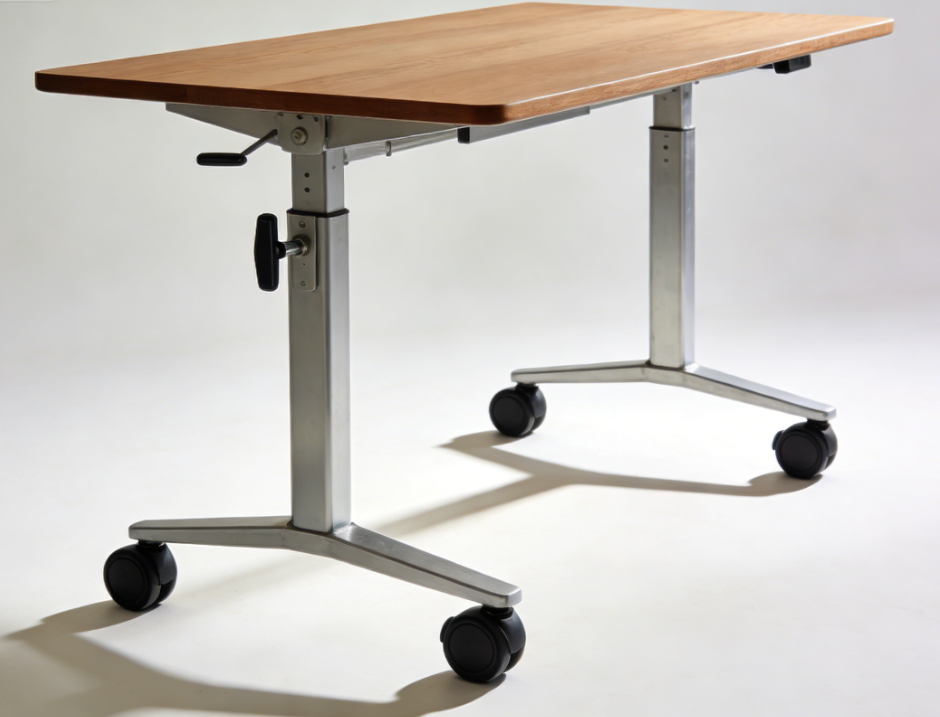
The, height adjustability of a desk is important, but the long-lasting benefit of ergonomically designed desks comes from the design-provided, integrated design factors. With a minimum 100 lbs (45 kg) designed to support the dual monitors, other computers and peripherals, the key design factors include the stability with low wobble. The best preference mechanism with the least friction is an electric with a programmable preset. A cost saving, but lower purchase cost, lower preference friction mechanism is a manual crank. The surface and integrated, but unmentioned design factors of the desk such as the unmentioned cable management system, are important to define the workflow, and support an integrated design while the use of the desk is optimized to reduce the distractions. Lastly, the absence of noise and smoothness of the combined, integrated design factors serves to facilitate the transition from one to the other between the combined spaces of high and shared workplace.
FAQ Section
Why are adjustable desks important?
Adjustable desks are crucial for good posture and ergonomics. They also protect users from developing musculoskeletal disorders. Different users has different heights and workflows, and adjustable desks help accommodate this.
What are the recommended height ranges for adjustable desks?
For the average adult (160-190 cm), the seated and standing ranges are 65-125 cm. For users who are shorter or taller, extended ranges (55-135 cm) become necessary.
How do adjustable desks help reduce workplace injuries?
Adjustable desks allow for neutral typing posture instead of compensatory posture. They also help workers better alternate between sitting and standing throughout the workday.
What features should I look for in an adjustable desk?
Look for adjustable desks with good height range, strong weight tolerance, little wobble, has good electric mechanisms, has good cable management, is adequately sized for your workspace, and has an adequate surface area that operates quietly.