 EN
EN
Adjusting the Length of Curtain Rods: Methods and Disadvantages
Cutting Curtain Rods On-Site versus Factory Pre-Cut Rods: How Tools and Tolerances Affect Rod Structure
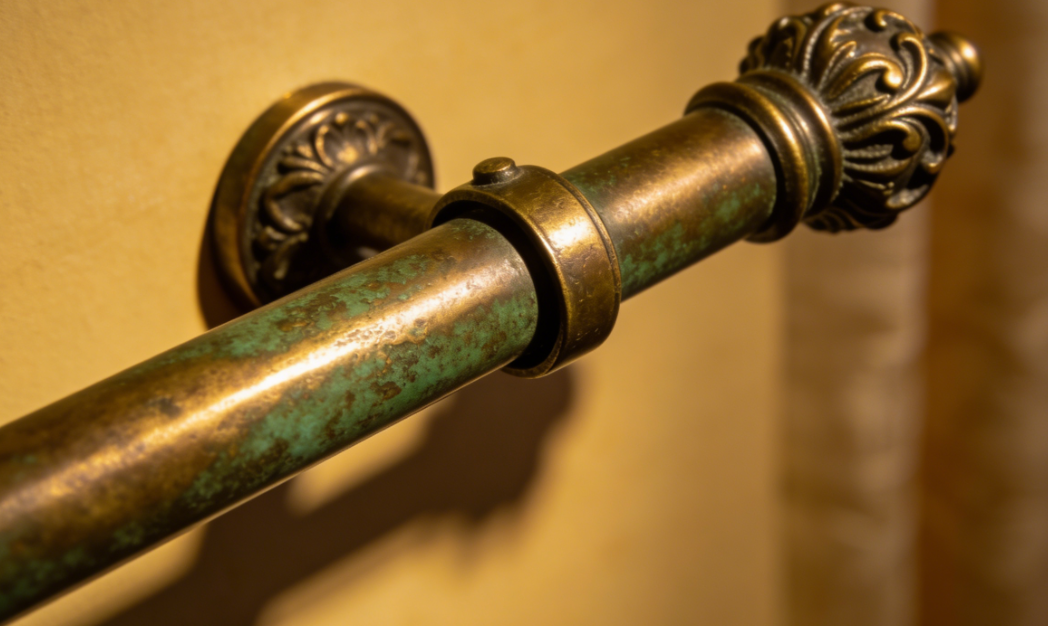
When cutting rod curtains on-site, tools like pipe cutters and fine-toothed hacksaws are necessary. Unlike cutting done off-site, on-site cutting is instant and eliminates the wait, but is still risky. Cutting on-site can lead to wall thinning as well as micro-fractures that create structural weaknesses, resulting in load capacity loss of 15 to 20 percent (Ponemon 2023). In comparison, curtains pre-cut off-site have tolerances of ±1.5 mm, are manufactured with CNC tools and have been given annealing to assist in maintaining the shape and strength of curtains. Although the loss of load capacity can be significant, the customizability of curtains is still somewhat limited, as suppliers have begun to assist in cuts that are offered in increments of 0.5m, with the shortest supplying length of 60 cm, to assist in the prevention of cutting curtains to the point they are mid-span buckling due to the loads of average use in typical households.
Extensions with Load Capacity and Aesthetic Continuity
Curtains that are telescopic use nested tubing to provide the ability to adjust the curtains. Unfortunately, the adjustments are made at the cost of load capacity decreasing by 30%, per architectural hardware testing standards, as compared to a solid rod. Unlike telescopic systems, connection-based systems use interlocking sleeves or precision-matched brackets, and will have a seamless finish as compared to the connection slips that are clearly visible as a result of mis-sized interlocking systems. Both connection-based and telescopic systems are capable of spanning 5 meters, however, telescopic systems are more preferable due to the smooth lines, as compared to the visible lines and potential shadow casting in lighting. A performance limit, for the weights, must be present to ensure that design is still practical with ease of use and the slippage of the curtain rod is guard against, which is typically loss of capacity of ≤15 kg per meter as a rating per rod.
Customization of Curtain Rod Finishing
Durability, Lead Spans of Finishing Methods, and Suitability of Curtain Rod Finishings
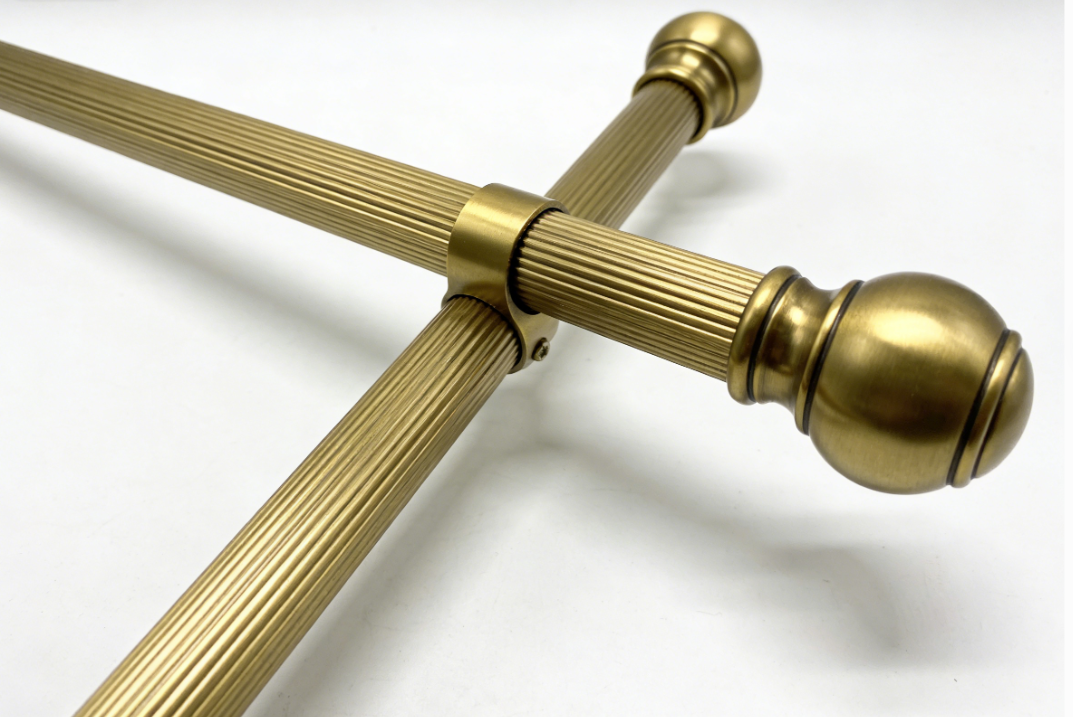
Durability, lead time and suitability of electroplating, Physical vapor deposition (PVD), and powderPVD coats are important when evaluating tried-and-true methods of customizing finishes of curtain rods for home use. Electroplating adds thin sheets of metallic crystal (e.g. chrome, nickel, etc.) to the curtain rod for a lustrous aesthetic. These electroplated layers do not react well to direct scratches and require a gentle hand for cleaning to maintain the aestheticlayer. PVD applied finishes are not only the strongest evaporated coating, but also the most scratch, fade and abrasion layer. However, the lead time for a PVD finish is a chip longer, taking 10-14 days. Powder coating is the the easiest to execute and most satisfacory executor of finishing methods. The electrostatic application followed by a thermal cure produces a finishes rod that is thick, uniform, and impact resistent. It is the most beneficial, practical and durable finishing method when combined with 5-10 day shipping responsiveness and 200 plus colors.
Uniformity of Color Match: RAL Advice and Guiding Lighting
Uniformity of color match adheres to color standards RAL (common to Europe) and ANSI (common to North America), which provide color tuning pigments which define the variation color system between rods, finials and brackets. However, perceived colors shift when the system lighting also varies. Day lighting may yield a curtain rod to exhibit cool or even color and under an incandescent bulb or colored lighting.
To lessen the variation, batch mixing, as piloted by leading suppliers, is better achieved through one large batch, as opposed to several smaller batches. These large batches are then, controlled, both by uniformity of pigments and the use of colored light to measure uniformity. The system also exhibits a ΔE (default) improved batch variation measurements of 1.0. When the system relies on tight tolerance, consistent system lighting and preferred color, a sample swatch is 1.0 better color matched when viewed as the system lighting color the swatch is to replace.
Balancing Customization with Performance: Interactions Between Length, Diameter, and Finish
Changing any one of these three variables—length, diameter, or finish—impacts the remaining variables both structurally and aesthetically. Lengthening the rod without changing the diameter will increase sagging risk, for example, 120-inch rods will require an increase to 30% wall thickness compared to the 60-inch version, in order to reduce angular deflection to below 0.5° (Ponemon 2023). Finish selection also determines behavior—PVD and powder coating do increase corrosion resistance, however the differences in base metals compared to the coatings, do create the possibility for micro-cracking to occur with the changes in temperature. For example, aluminum rods expand by 0.01% for every 10°F shift, which becomes critical with finishes that do not allow for any flex.
Load Limitations and Finish Stability also set boundaries.
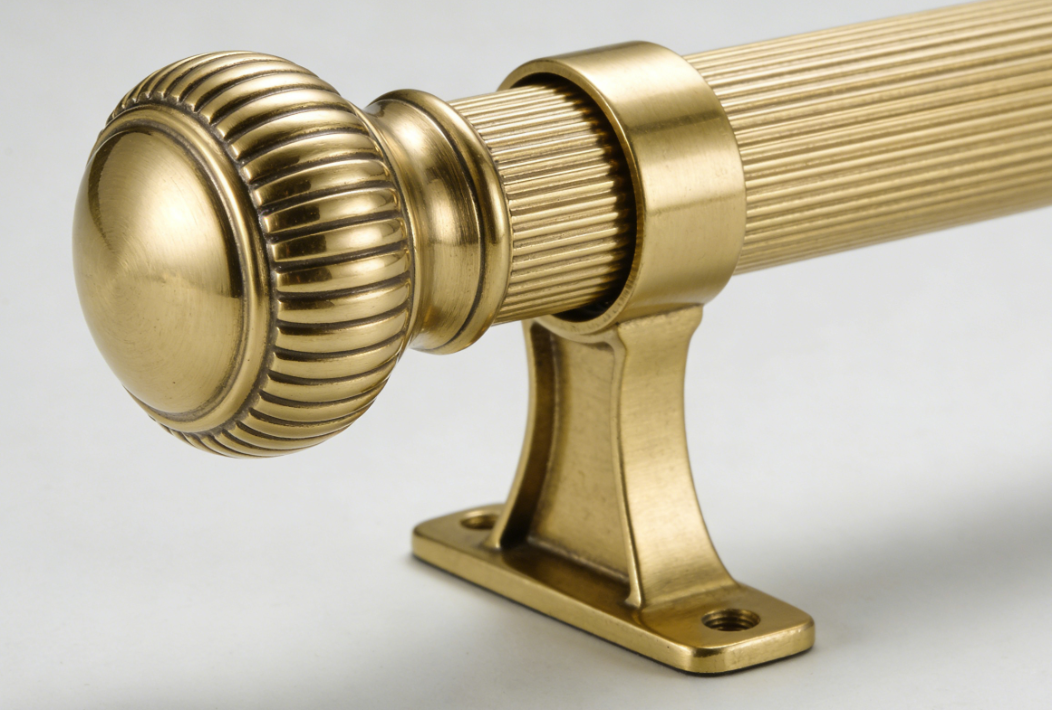
Every 0.5-inch diameter reduction results in a reduction of the safe working load by about 15 lbs.
Powder coating can withstand 200 hours of humidity testing.
Electroplating can withstand about 500 hours of testing.
It is expected that these issues can be solved by the use of precision engineering. Finite element analyses, accelerated weathering tests, and tolerance stacking from top manufacturers all fall within a cumulative variance of about ±0.02", which is a reliable measurement. Ponemon (2023) also states that about $740,000 are spent annually by the manufacturers on the rework needed for the custom rods, which also shows the need for the integrated design protocols where the finish specifications direct the choices of the materials, and length changes automatically result in changes to the diameter.
FAQ
Are curtain rods adjustable in length?
Yes, metal curtain rods can be accurately shortened using a pipe cutting tool or fine-tooth hacksaw, but improper cutting can lead to extremely dangerous micro-fractures.
What is the benefit of curtain rods that are factory pre-cut?
Factory pre-cut rods can be precisely pre-cut to a tolerance of ±1.5 mm and can be sturdily pre-cut using processes such as controlled annealing. Factory pre-cut rods are limited for custom adjustment choices to increments of 0.5 meters.
What is a comparison of the operating characteristics of telescoping and solid curtain rods?
Are all micros and PVD finishes, and all powder coatings the same?
Micros finish has a high luster, but is vulnerable to scratching. PVD has the longest lead time, but has a greater capacity for being durable. Powder coating has a greater array of colors and a shortened lead time, and has the highest impact resistance.
What is the best way to keep color harmony among the curtain rods and fittings?
Conduct a color harmony among the curtain rods and fittings using a spectrophotometer, and opt for finalized pigment system color harmonies using RAL or ANSI.
To what extent do curtain rod dimensions and finishing affect rod customization capability?
Redesigning the length, girth, or finish of curtain rods can impact aesthetics and limit how durable the rods can be. For instance, an unmeasured increase of length, combined with an unmeasured increased in diameter, can impact sagging length. An unmeasured increase in the finishing of volatile temperatures can increase the effects of micro-cracking.