 EN
EN
Unmatched Structural Performance for Challenging Industrial Use
Support for Heavy Machinery and Multistory Configurations
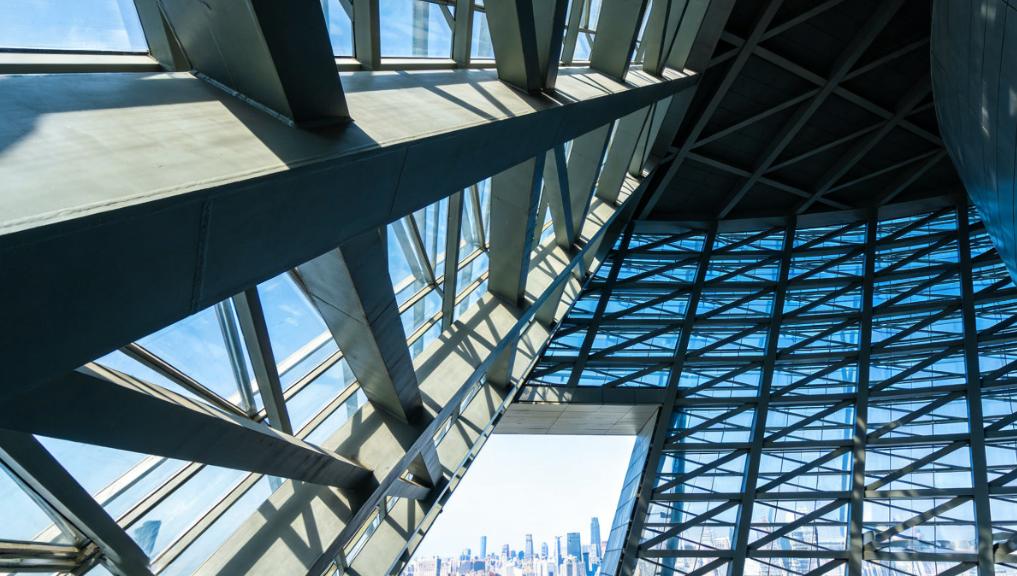
Steel frame construction provides superior structural integrity through high tensile strength; enabling industrial facilities to support overhead cranes and multi-ton presses and multi-story storage systems as concentrated loads in excess of 50 tons per square meter. The ductile property of steel also provides protection from sudden failure due to seismic forces and/or impact, which is additionally validated by standard seismic testing. This enables industrial operators to vertically stack production lines and increase the efficiency of the floor space by 40-60% as compared to single level layouts. This also allows for the control of the vibration transmission, which is especially important for sensitive equipment.
Unobstructed large spans and column-free space increase efficiency and flexibility
Steel framing allows for uninterrupted spans of more than 60 m, something that is impossible with any other conventional construction materials. This allows for the total restructuring of the material workflow on the floor as operators, including forklifts and automated guided vehicles (AGVs), can travel unhindered between the spans, which often can improve the throughput up to 30%. This unrestricted arrangement also greatly simplifies the necessary renovations for future use of the building, as interior partitions can be rearranged without any structural alteration of the frame which greatly reduces the renovation costs on the order of $120 to $180 per square meter, as well as minimizing the downtime of the operational process. This flexibility for extension and renovation is also facilitated by the use of prefabricated steel components and modular designs. Standardisation allows for the production of components that could be utilized in extended renovations, further reducing downtime and renovation costs.
Safety, Durability, Longevity
Because of this construction materials unrivaled non combustibility, it allows for entire industry standards related to fortifying a structure's fire safety to fog in your direction.
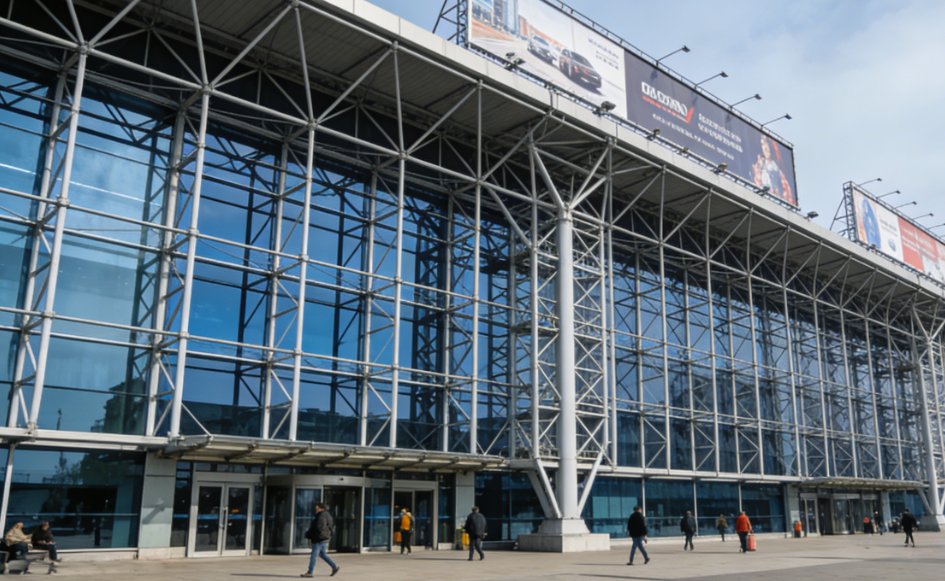
Steel is a construction material that doesn't catch fire, it also doesn't lose its integrity when it gets hot meaning it is compliant with all of the NFPA's safety codes. and unlike other construction materials that are combustable, it does not allow for a rapid spread of fire, buy steel allows for a conscious and safe evacuation when a fire does break out. For an industry that deals with combustable materials, this is of the utmost importance. When a structural fire in a steel company is confined to a compartment. it leads to lower insurance premiums and in 2024, industrial risk assessments will show a decrease in premiums of 15 to 30 %.
Steel with the proper Corrosion Resistant and Pest Proof coatings, will last for more than 50 years with little to zero visible maintenance
Steel that has a galvanization and a chemical epoxy coating will provide protection on a molecular level, from moisture and chemical and UV exposures. This is a barrier to steel deterioration, and it means steel is suitable and protected for the harshest environments on a chemical-processing scale all the way to coastal facilities. This is confirmed by the 2023 issue of ASTM B117 which states that the coated steel will retain 98% of its structural integrity after a 50 year simulated exposure. Steel is also non porous and non organic which creates a situation that will not allow for the growth of mold, and will not allow for pest issues that will cause maintenance costs to increase the average costs to maintain a facility by $18,000 for each 10,000 square feet according to the facility management journal.
Predictable Costs and a Shorter Construction Timeline
Because construction is time sensitive, the ability to prefabricate steel frames and reduce time in the construction phase by roughly 40% due to being a time sensitive construction material
Construction that includes steel frame work is other construction methods due to the ability to be prefabricated as well as other time sensitive materials. Because construction with prefabricated time sensitive materials allows construction to be carried out in a step by step basis which allows for construction to be carried out in a continuous fashion as soon as other time sensitive materials are placed. Because of this, steel frame work is the evident choice if time is a factor.
Precise communication with the Factory can help eliminate unnecessary material use and rework in the field. This level of precision improves the ability to estimate costs and predict the overall costs of the project. Project managers can bypass typical overruns that are the result of weather delays and labor inefficient. Studies show that the use of prefabrication will lead to a 10-20% drop in unexpected project costs. Faster occupancy means a quicker return on investment. Facilities will have the ability to generate revenue several months earlier than comparative facilities.
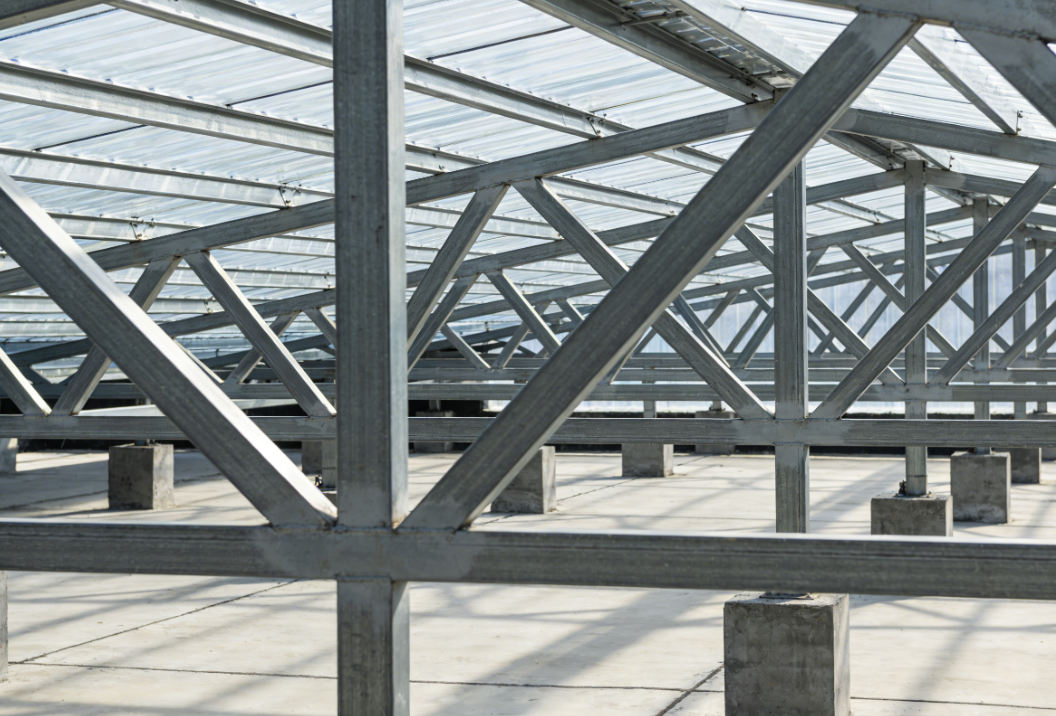
Steel frame construction provides project costs with scope, pricing, and scheduling certainty which provides unparalleled financial transparency post ground breaking all the way through to tenant occupancy.
Lifecycle Value: Adaptability, Scalability, & Sustainable Reuse
Steel frame construction will provide long term value with the ability to adapt, expand, and align with a circular economy. Steel frames allow for modular designs to provide all of the necessary flexibility for and subsequent reconfiguration. This means additional walls and access to mezzanines or bays can be added and moved with minimal modification to the overall structure. This provides rigidity to the production systems with no demolition waste to repurpose the systems. Steel frame construction also allows for basement grade extensions to flooring areas greater than 30%. Steel is also 100% and infinitely recyclable material without any loss to its initial quality. Steel construction also provides a level of fabrication that can achieve an end-of-life recovery above 90%. When a building reaches its obsolescence steel retains a residual value that can be recuperated on three or more lifecycles across different building constructions to achieve a reduction in the embodied carbon of 50-75% and conserve virgin resources compared to constructing a new building.
Frequently Asked Questions.
What is the tensile strength benefit of steel frame construction.
Steel frame construction is able to provide construction with a high tensile strength which is also able to provide 3 times that of concrete construction which allows the frame structure to have the ability to support without restrictive construction the addition of multi-story layouts and heavy equipment/machinery.
What is the impact of workflow in industrial spaces with the use of steel frames?
Steel frames have the ability to span large distances with no columns or other elements that break the flow of the space. This improvement of flow aids in the handling of materials and workflow. Steel frames also allow flexibility if spaces need to be changed or reconfigured in the future with the reallocation of minimal structural modifications.
Are steel frames combustible or corrodible?
Steel frames are considered non-combustible materials and are also able to have additional coatings applied to them which will make them resistant to corrosion. This means that steel frame materials are able to be used in many different industrial environments and also maintain compliance with the various safety requirements needed for industrial environments.
What is the positive result of off-site development of prefabricated steel frame pieces?
Off-site development of prefabricated steel frame pieces will minimize the development delays that are structured around the weather. This will aid in the development of the industrial space in a timely manner and will allow the overall project to stay within budget constraints which is extremely important when developing industrial spaces.
What is the reason that steel frame buildings are recognized as a positive impact on the environment?
Steel frame buildings are proven to be positive for the environment because of the decrease in impact on the environment as a result of the decrease in use of natural resources due to the full adaptability and recyclability of the steel frame buildings.